Read Time 4 mins | Written by: Yicheng Wang
Picture this.
It's Monday morning. An engineer on your team spins up a new AI agent and connects it to your internal database. No approval. No audit trail. No one else knows it exists.
By Friday, three other teams have done the same thing.
This is how shadow IT starts — except now it's moving at AI speed.
Sound familiar? You're not alone.
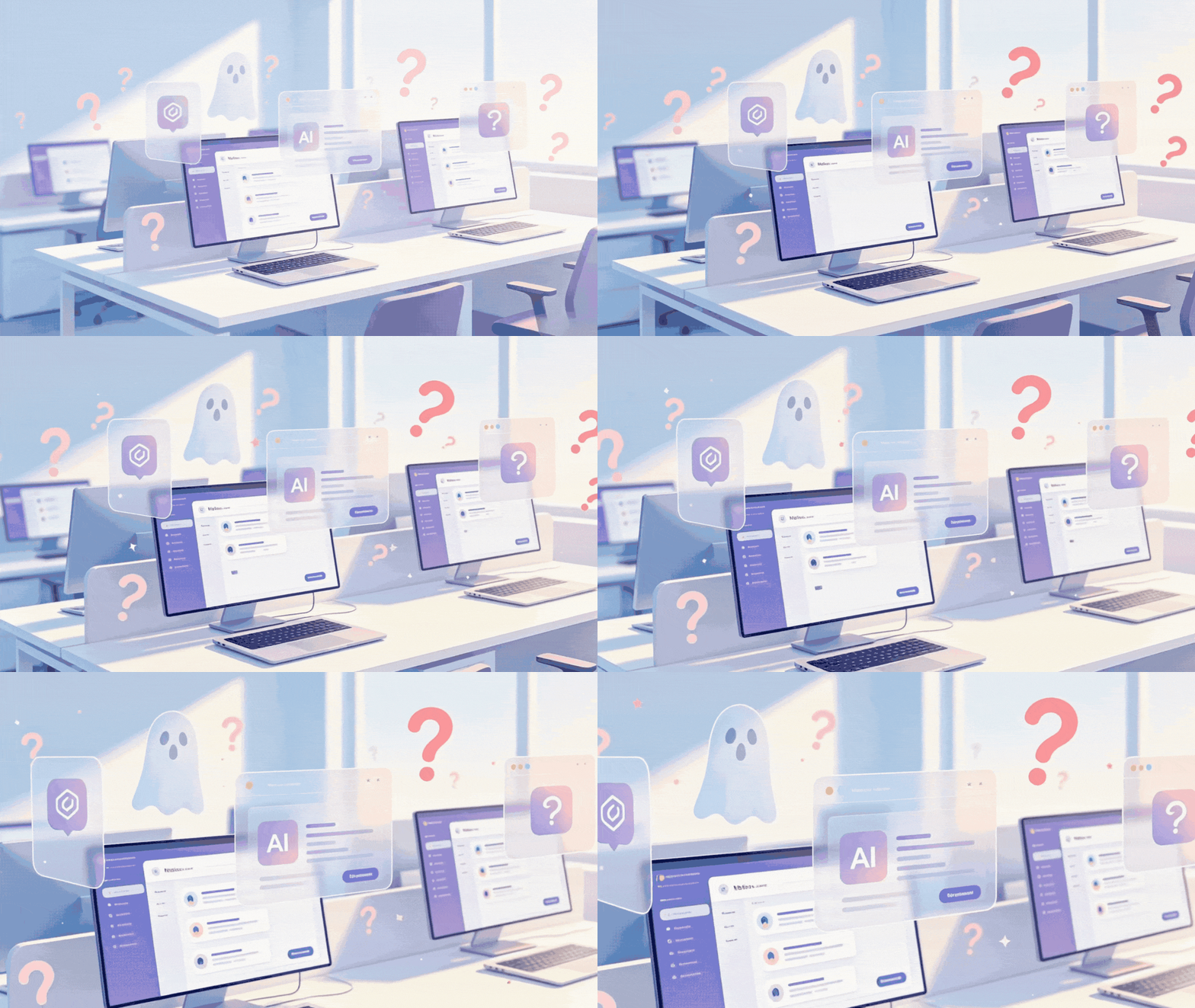
As AI copilots spread across enterprise teams, the same question keeps coming up in every compliance team's mind: "Who actually controls what our AI can access?"
.png?width=151&height=151&name=Jarvis%20demo%20for%20Authentication%20and%20Governance%20(22).png)
We built the answer. It's called Jarvis Registry.
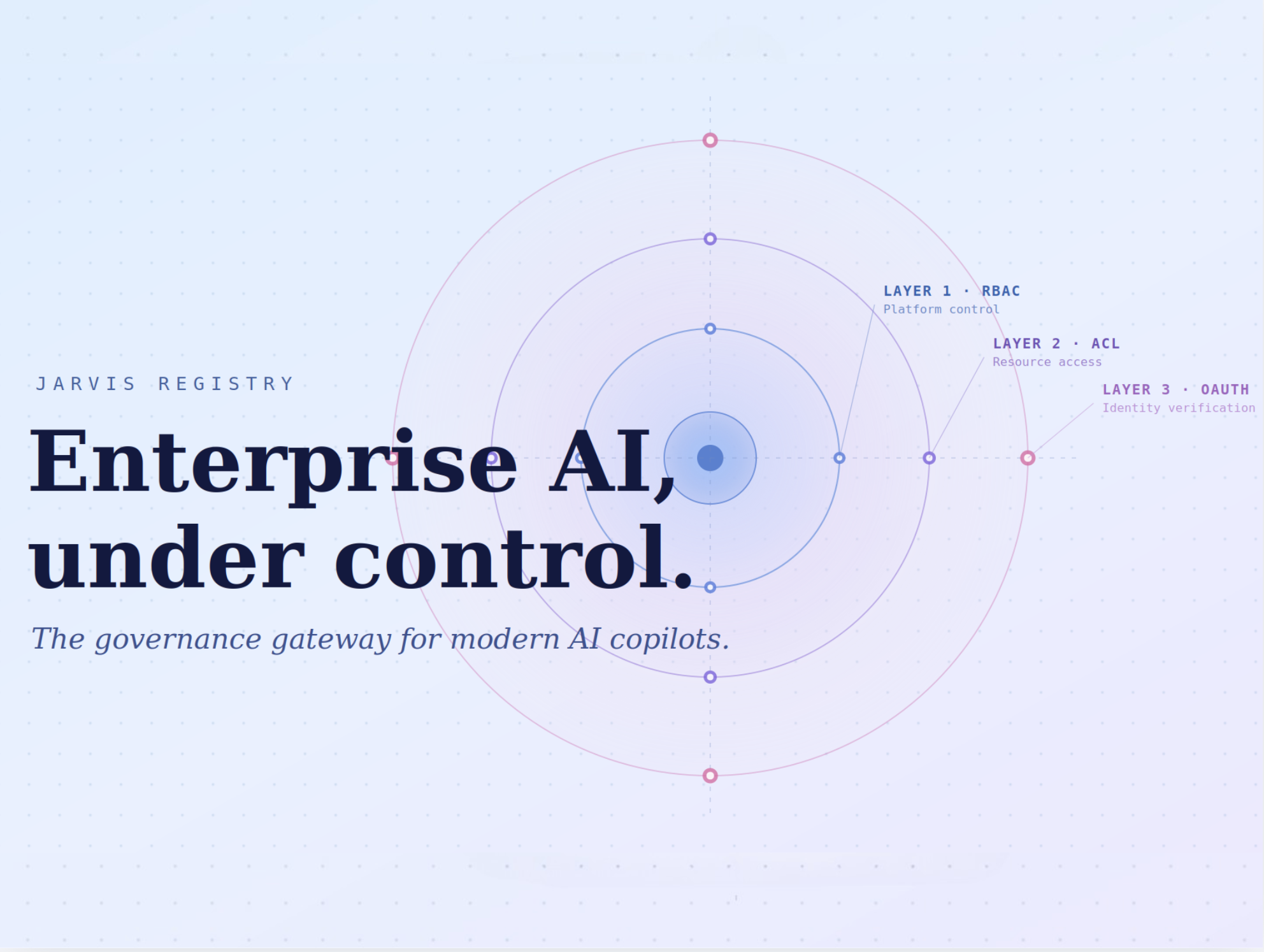
3-Layer Governance Framework for Enterprise AI
Click to watch the video
What's the 3-Layer Framework
01. RBAC
Who can build AI tools?
AI tool creation is a deliberate, governed act — not something that happens ad hoc. Every MCP and agent in Jarvis was created by someone with the explicit authority to do so.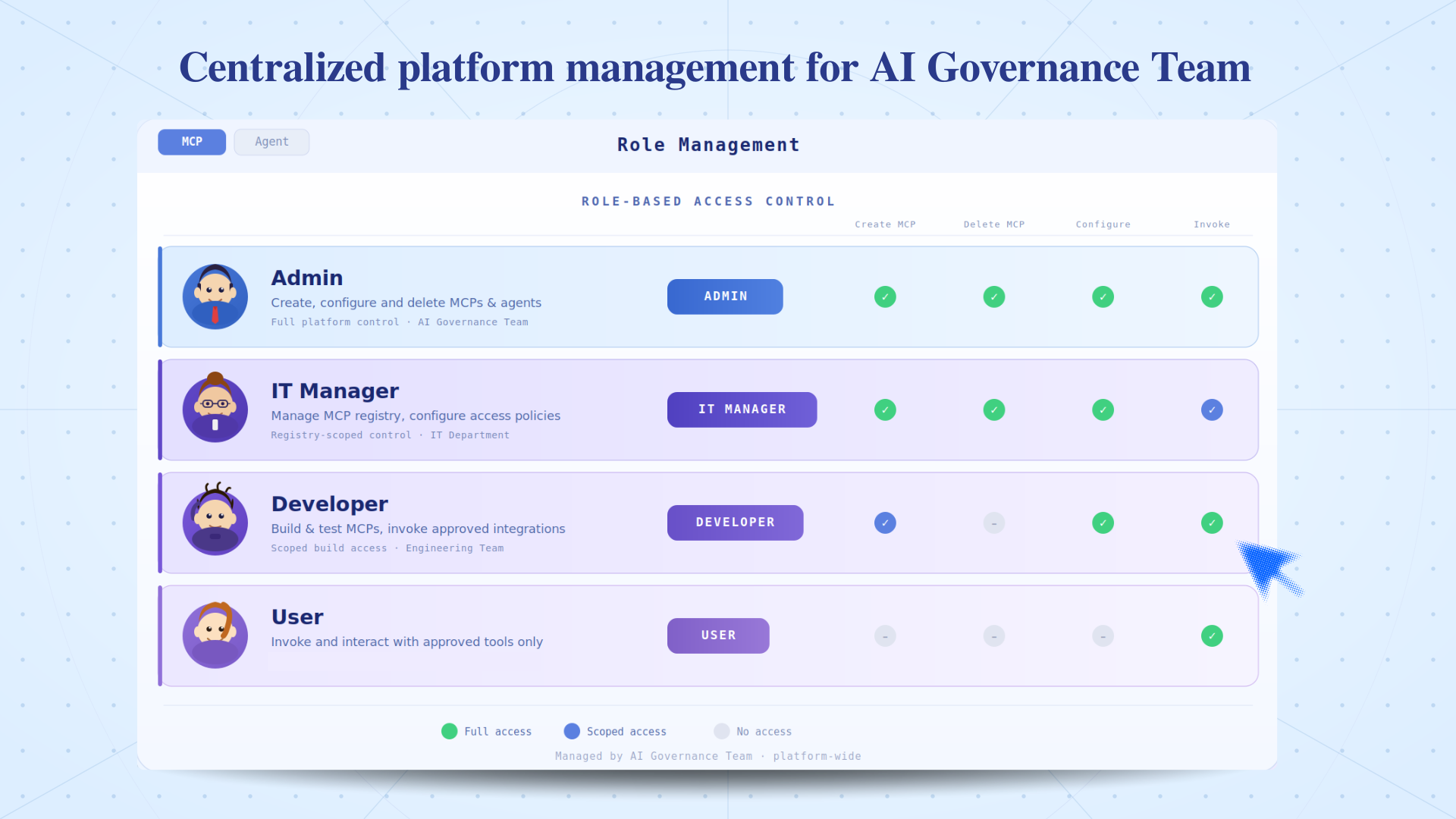
02. ACL
Who can connect to a specific tool?
Every MCP and agent has an owner who decides exactly who gets access. On the list? The tool appears. Not on it? The tool doesn’t exist for you.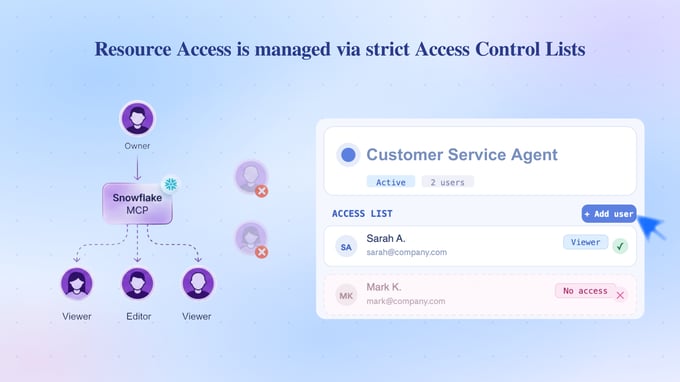
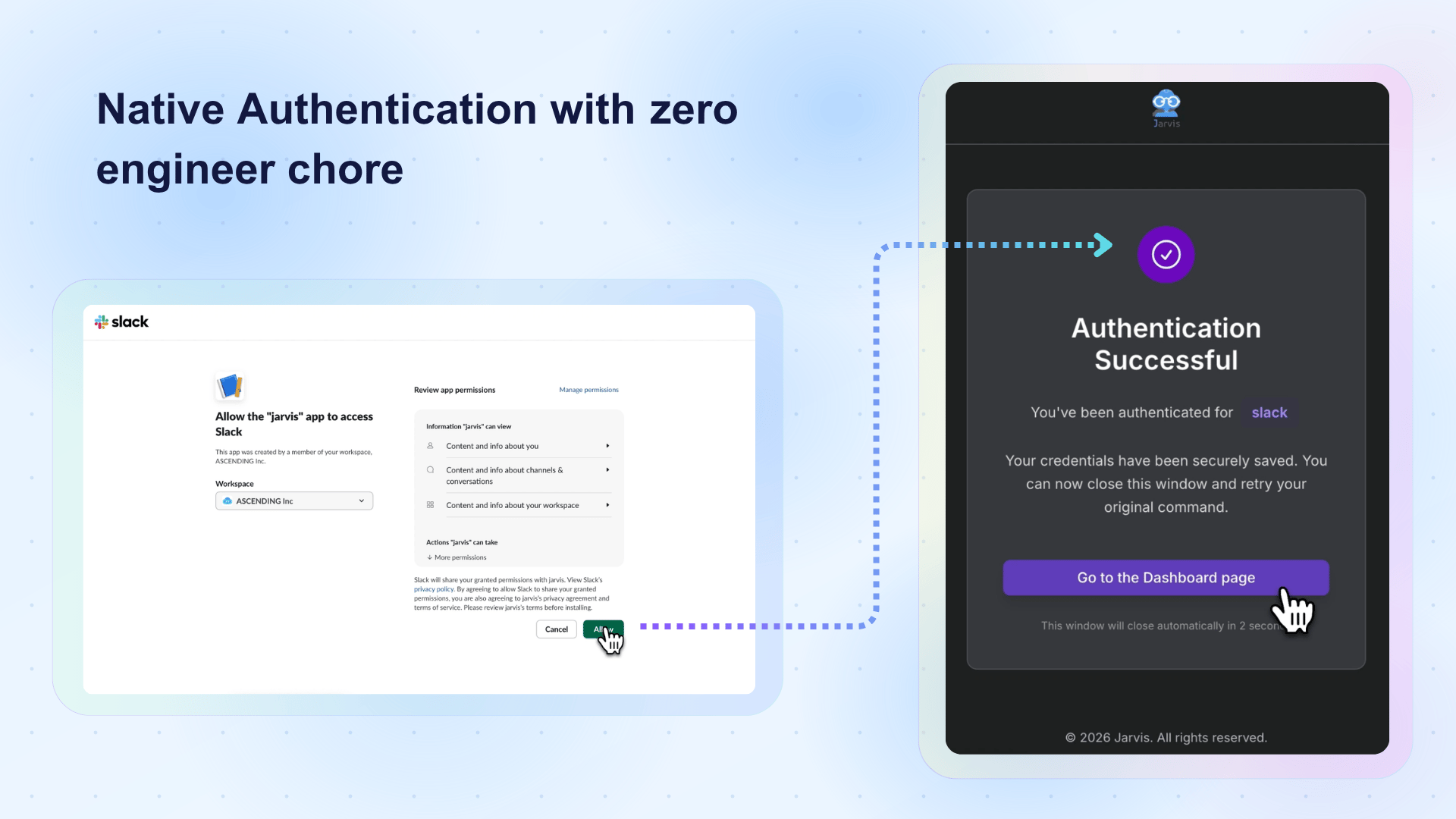
03. OAuth (optional)
Is this user actually authorized?
When enabled, Jarvis verifies that the user has the right entitlements in the third-party system — and that the MCP is a registered, authorized client, not a rogue tool pretending to be you.
|
That engineer from Monday morning?
With Jarvis Registry, the story ends differently — with an approval, an audit trail, and a governance team that actually knows what's running.
That's what enterprise AI governance looks like when it's done right.
|